Powered by Women First Digital

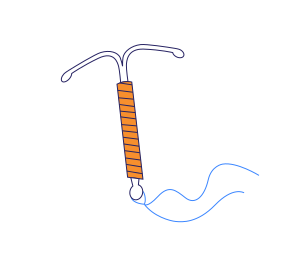
Copper IUD Contraindications

Copper IUD Contraindications

A Copper IUD is a safe and effective method of contraception for most women. However, it may not work for individuals with certain health conditions including copper allergy. It is therefore important to disclose any health condition or medication that you are taking to your health care provider during your contraceptive eligibility screening.

Copper IUD usage is not recommended if:

– you have Wilson’s disease [13];
– you have a copper allergy;
– you are experiencing unexplained vaginal bleeding (your doctor will need to investigate the cause of this before the insertion of the IUD);
– you have any gynecological or obstetric conditions, such as pelvic tuberculosis or genital cancer;
– you have had an infection of the reproductive organs (uterus) following childbirth or an abortion within the last three months (once treated, a doctor will re-evaluate you to determine if you are ready for an IUD insertion);
– you have fibroids; and
– you have cancer of the uterus or cervix.
If you have any of the above mentioned conditions, please consult a qualified healthcare provider. You will be advised on the best contraceptive method for you.

Contraception Quiz

Need more help choosing your ideal method? Take our contraceptive quiz.

Answer a few simple questions, and based on the responses, we will recommend contraceptive options that could work for you.

Take the quiz
External Condom

Compare with similar Contraceptive Methods

Are you wondering if condoms are better than daily pills? Or if you should opt for a birth control implant? We're here to assist you in making this decision. You can select up to 5 contraceptive methods and compare them side by side to weigh the pros and cons of each.

Give a try to our Contraceptive Tool

In the example below, you'll find similar methods to the one you're currently reading about. Feel free to click on any that catch your interest or revisit our Contraceptive Methods page

Our Monthly Top Articles

Black Period Blood: What Does It Mean?

Black Period Blood: What Does It Mean?

In most cases, black period blood indicates that the blood was in the uterus and vagina for longer than usual. Because the blood had more time to oxidize and darken. Most often, the color is some s...

Does Masturbation Cause Low Testosterone?

Does Masturbation Cause Low Testosterone?

No, it doesn’t. If you’ve been worrying that masturbating too often is quietly tanking your hormones, you can put that worry down. The idea has been floating around forever, and fitness...

Black Period Blood: What Does It Mean?

Black Period Blood: What Does It Mean?

In most cases, black period blood indicates that the blood was in the uterus and vagina for longer than usual. Because the blood had more time to oxidize and darken. Most often, the color is some s...

Does Masturbation Cause Low Testosterone?

Does Masturbation Cause Low Testosterone?

No, it doesn’t. If you’ve been worrying that masturbating too often is quietly tanking your hormones, you can put that worry down. The idea has been floating around forever, and fitness...

Female Masturbation: Is It Normal and Safe?

Female Masturbation: Is It Normal and Safe?

Yes. Female masturbation is normal, and for many people, it’s safe. If you’ve ever worried that touching yourself might hurt your vagina, inflame your urethra, affect your fertility, mess with your...